Inside the guide — the numbers
What one warehouse is silently costing you.
Every major carrier prices on zones — the distance from your warehouse to the customer. Zone 1 is local; Zone 8 is coast to coast. One Southern California warehouse means every order to New York, Miami, Atlanta or Boston ships at the most expensive tier there is.
| Zone | Distance | Typical cost (3-lb package) | Ground transit |
|---|
| Zone 1–2 | Local / regional | $7–$9 | 1 day |
| Zone 3–4 | 300–600 miles | $9–$12 | 2 days |
| Zone 5–6 | 600–1,400 miles | $12–$16 | 2–3 days |
| Zone 7–8 | 1,400+ miles (coast to coast) | $16–$22 | 4–5 days |
$96,000 / year
The math in practice. A brand shipping 5,000 orders a month at ~3 lbs, with 40% going to the eastern half of the country from a single West Coast warehouse, pays Zone 6–8 rates on 2,000 orders a month. At a conservative $4 per package difference between Zone 2 and Zone 7, that's $8,000 a month in excess shipping — $96,000 a year — purely from warehouse placement. And that's before the competitive cost of 4–5 day delivery. Split the same inventory between Oxnard and Orangeburg and both coasts ship at Zone 1–3.
Port proximity, inbound and outbound
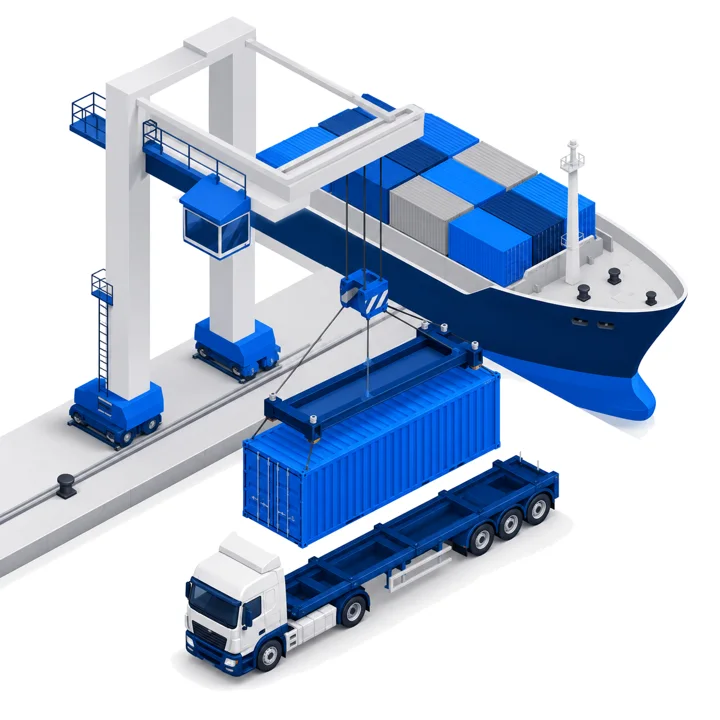
The Port of LA handles roughly 45% of all US container imports. A warehouse inside its drayage zone means containers clear customs and move into storage same- or next-day — instead of days of inland transit and thousands in drayage to a warehouse in Dallas or Chicago. Charleston does the same job for Europe and the Mediterranean.
Splitting without doubling complexity
Demand-based splitting (mirror your zip-code data — top SKUs at both sites, slow movers at one), channel-based routing (DTC from the nearest coast, retail replenishment from the facility nearest the retailer's DC), and seasonal rebalancing. Complexity scales with SKU count, not order volume.
Two-day ground without paying for air
From Oxnard: the West Coast, Southwest and much of the Mountain West in 1–2 days. From Orangeburg: the Southeast, Mid-Atlantic and Northeast in 1–3, the industrial Midwest in about 2. Combined, a coverage map that rivals enterprise networks at a fraction of the infrastructure.
Resilience: what a disruption does to one coast vs. two
| Disruption | Single-coast impact | Bi-coastal impact |
|---|
| Port congestion or closure | All inbound freight delayed. No alternative receiving. | Reroute to the opposite coast. Fulfillment continues. |
| Regional weather event (hurricane, wildfire) | Operations halt entirely. No backup facility. | Shift volume to the unaffected facility within hours. |
| Carrier service disruption | All outbound affected; higher-zone alternate routing. | Orders route from the closest operational facility. |
| Labor action or strike | 100% of fulfillment at risk. | Redundant capacity absorbs volume from the affected site. |
In 2021 the Port of LA backlog left ships anchored offshore for weeks. Brands with one West Coast warehouse waited. Brands with bi-coastal operations rerouted inbound through East Coast ports and kept shipping. The full guide closes with an honest self-assessment for whether the split pays off at your volume, SKU count and customer geography.